Thank you
Thanks for reaching out. We will get back to you soon.
Oops! Something went wrong while submitting the form.


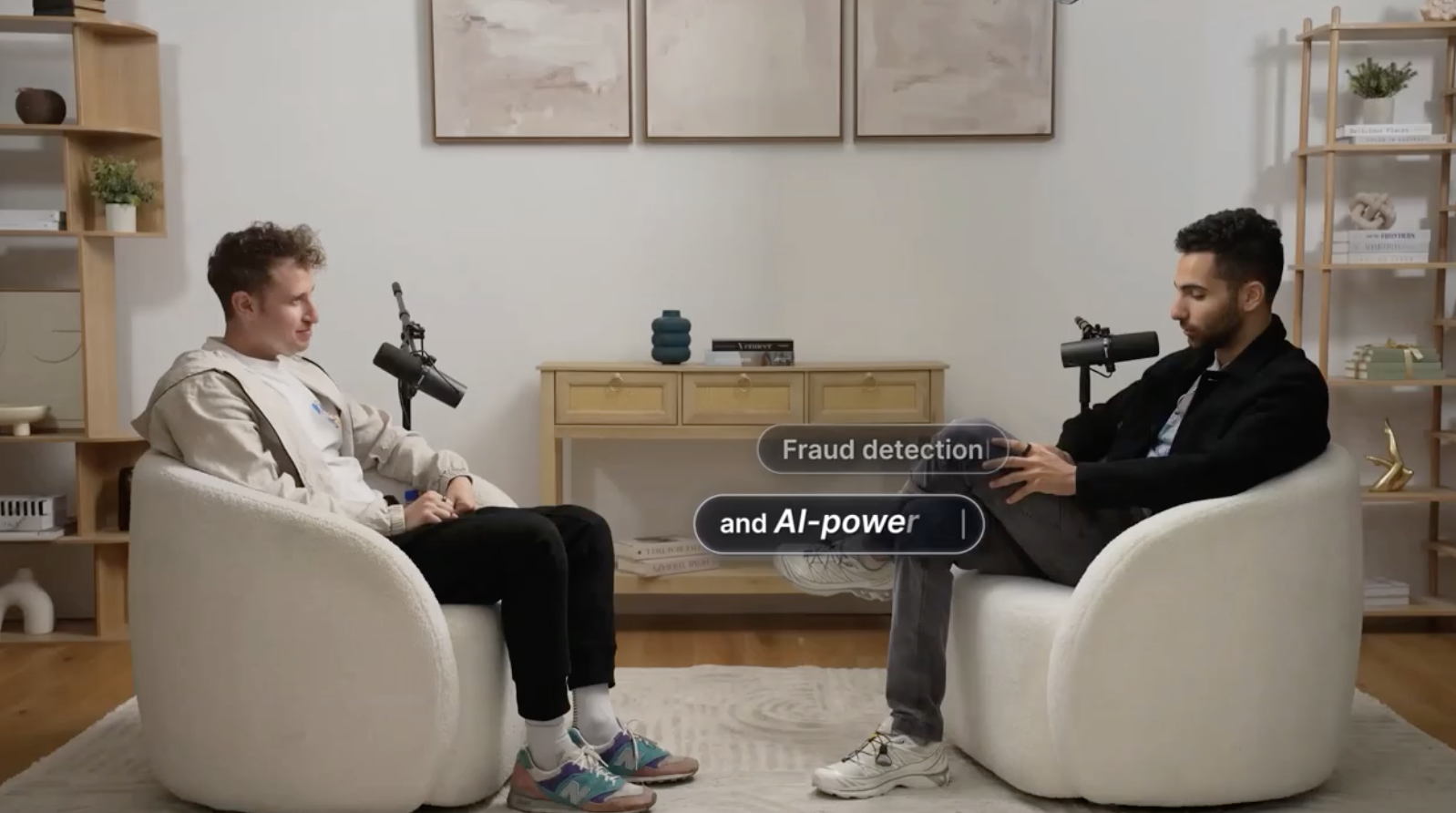

Most founders optimize their fundraising story for the next board meeting. They protect the narrative, smooth the numbers, and let investors believe the part of the business that looks best is the part that matters most. It feels like good management. It is usually just fear of an uncomfortable conversation.
Eli Wachs, co-founder and CEO of Footprint, runs the opposite play. He has told investors outright that growth will go flat for half a year, on purpose, because the linear path is the wrong one. Footprint has raised over twenty million dollars from Index Ventures and QED, with an unannounced Series B on top, so this is not a founder with nothing to lose talking.
Here is how Wachs thinks about choosing money, having the hard conversations early, and spending against a future that has not arrived yet.
There was no shortage of interest when Footprint raised. Plenty of VCs were circling, most with real value to add. Wachs did not simply take the term sheet with the highest valuation. He took the group he believes can function as a king maker, a strategic backer with the reach to amplify the company far more over the long run than a richer mark would.
Underneath that is a read on how venture actually works now. The power law is getting more extreme, not less. Starting a company has been democratized, which means more companies and more extinction events, and the ones that break out break out massively. In that world the marginal valuation point matters less than whether your investors can credibly pull you into the winners' column.
Wachs is candid that the trust he wants from investors is built by saying hard things out loud before he has to. He has told backers that he would be failing them by trying to grow linearly when the same effort could set up exponential growth instead. The specific bet: that regulators would eventually bless banks using AI to investigate financial crime, and that being one of the three names in the RFP when roughly forty billion dollars shifts from outsourced labor to IT spend is worth more than safely growing a business he is confident no one will find interesting in two years.
He cannot guarantee the timing. He cannot guarantee how much of that pool survives price compression. What he can do is be honest that the money is moving and position for it now, while he still has the trust to make that argument, even knowing investors need to spend time with their winners and that he might get tossed aside in two years anyway. He would rather take that chance with trust in hand.
One of the sharpest things Wachs took from his time investing at General Atlantic was to distrust the prevailing advice. He sat there during the grow-at-all-costs era, when the gospel was hire aggressively. He left right as it flipped to be profitable, advice that went stale almost immediately when the market swung back toward growth. The lesson was not which slogan is correct. It is that the slogan changes faster than your company can pivot around it, and that an investor, by his own admission, often has only a cursory understanding of any single company they back.
His co-founder origin story is the same instinct applied to people. Index offered a seed round subject to him finding a technical co-founder they liked as much as they liked him. He flew to San Francisco, started asking everyone for the three smartest people they knew, talked to twenty or thirty of them, and locked in with Alex Grinman within ten minutes of a Zoom and a single in-person meeting three days later. Pattern matching and references over the fantasy of being Sherlock Holmes.
Wachs used to be stingy. No conference booths, pride in a small team, headcount treated as the opposite of a metric. He has reversed hard. A VP of marketing was hired with a mandate that amounts to spend money. The sales team went from three people to over ten. And he is now, in his words, all in on booths, because social proof is everything and at a conference social proof is the biggest booth on the floor.
The proof was immediate and a little absurd. Footprint took the biggest booth at a recent conference, and large banks started introducing them to colleagues on the logic that a company willing to spend that much should be taken seriously. It meant nothing about the technology and everything about perception. Wachs quotes a line he loves, that perception is real and the truth is not. The deeper correction came from a founder friend whose company kept climbing: build the best architecture and assume you will win, and you will lose, because no one is going to fairly evaluate you. This is not a meritocracy.
The founders who scale are not the ones who protect the comfortable story. They are the ones who will tell an investor that growth is about to stall because the bigger swing is worth it, who pick the backer who can amplify them over the one who flatters them, and who accept that perception and brand decide outcomes that pure merit never will.
Every founder eventually faces the choice between the linear path that looks safe and the exponential one that requires an uncomfortable conversation today. The ones who win have that conversation while they still have the trust to be believed.
If you enjoyed this article, subscribe to The Unordinary's Podcast.
.svg)