Thank you
Thanks for reaching out. We will get back to you soon.
Oops! Something went wrong while submitting the form.


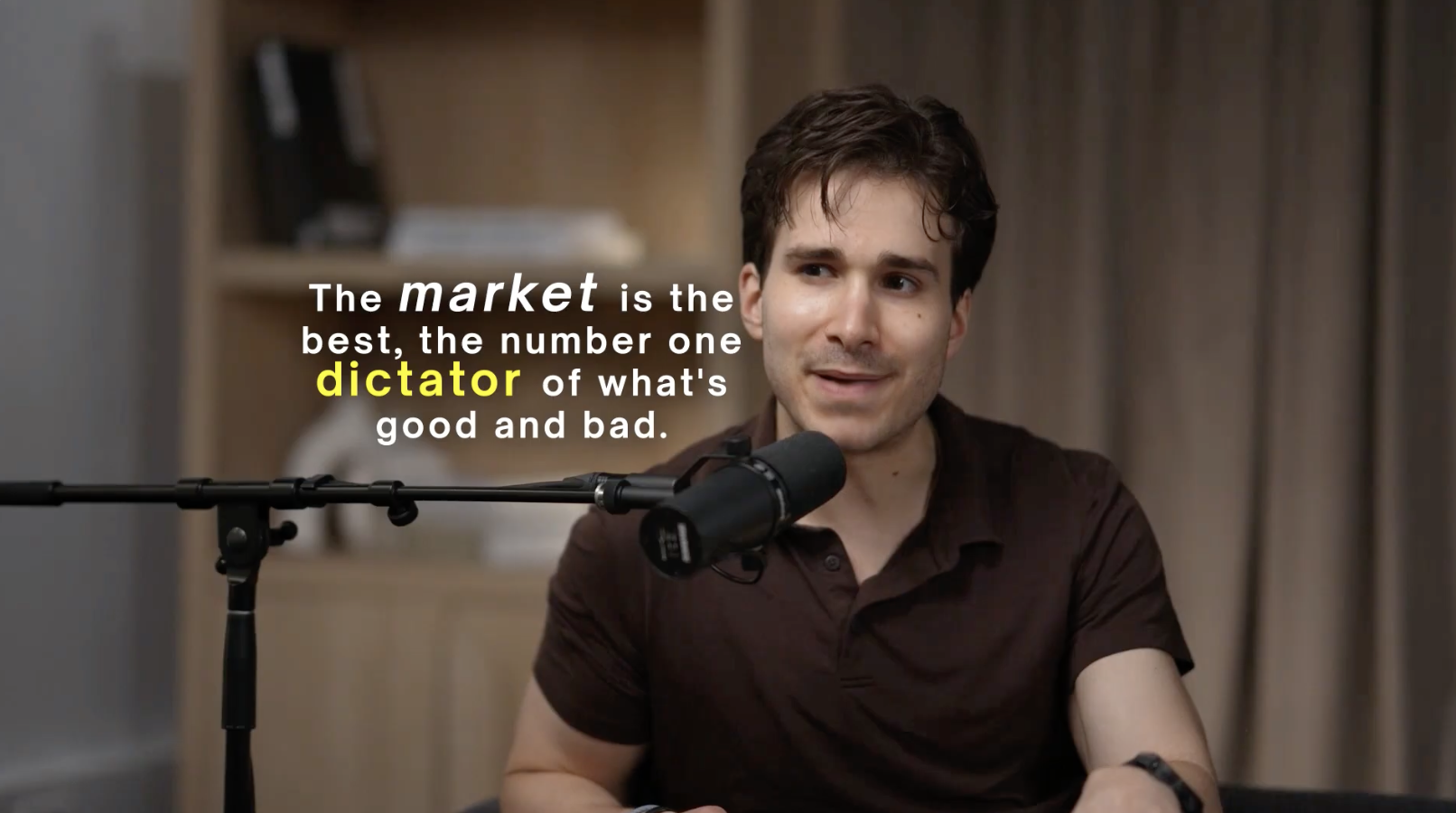

Most second-time founders talk about their first company the way people talk about an ex they've processed in therapy. Thoughtful. Measured. Carefully edited. The real lessons, the ones that cost money and time and had actual names attached to them, tend to get smoothed over in the retelling.
Dylan Gambardella doesn't do that. He built NextGen HQ from a 300-person event funded with bar mitzvah money to a platform with 200,000 digital users in eight years. He will tell you exactly how a 10-month app build burned nine months of market learnings, why the seasoned salesperson hire backfires in a zero-resource environment, and how the timing of a market can make or break the same pitch delivered six months apart.
Here is what Gambardella rebuilt at Different Health after scaling NextGen, and why the second company moves faster not because of better luck, but because of more expensive data.
NextGen HQ built a mobile app. Talented engineers, a real product, a genuine vision for what it could be. The build took somewhere between 10 and 11 months before a single user touched it. By the time it shipped, the market had moved. Users engaged with one core feature and ignored the rest. Roughly 75% of what had been built turned out to be wrong. Three more months of retooling followed before the product was back in market shape.
The total cost was close to nine months of learning that could have arrived in the first two, had the product shipped earlier and let real users react.
The lesson Gambardella draws from this is not to lower standards. It is to change the definition of what done means. At Different Health, the standard is 95%. Get to 95% and ship. The remaining 5% takes a disproportionate amount of time and produces no information, because information only comes from the market, and you can't reach the market from inside your own build cycle. Two things get the exception: HIPAA-regulated medical data and anything that goes to clients in the health context. Everything else ships fast and learns faster.
The 10-month build that cost NextGen nine months of learnings is now a week-and-a-half project. The tooling that exists today, which Gambardella calls vibe coding, has compressed the cost of getting something to market dramatically. The argument for waiting until it's perfect was already weak in 2015. In 2025, it's indefensible.
The implication is not just tactical. It changes who can build what, how fast, and with what level of resources. The founders who move fastest are the ones who've internalized that the product is a hypothesis and the market is the experiment. The build is not the work. The learning is.
The temptation at every early-stage company is the same: bring in someone who has already done the thing you need done. The VP of Sales who closed $2M last year. The Marketing Director who ran brand for a company you respect. The logic feels airtight. You're buying proven output.
What you're actually buying is proven output in a specific context. That context almost never matches a startup environment. The VP of Sales who closed $2M last year had an SDR filling their calendar, a marketing team generating inbound, a brand doing the credibility work, and a comp structure that assumed support infrastructure. Put that same person into a pre-PMF startup where they're generating their own leads, building their own pitch, and working without any of the tools they relied on, and the track record doesn't transfer.
Gambardella is direct about where this went wrong at NextGen and where he catches himself wanting to repeat the pattern at Different Health. The fix is not to avoid experienced hires. It is to be honest about which version of the role the person is built for. The question is not whether they can do the job. It is whether they can do the job with nothing.
Round two, the hiring framework shifted. The principle is to find people who are better than Gambardella at things he is not trying to be the best at, then get out of their way. Different Health's first team members were scientists and medical doctors. PhDs, MDs, nutritionists, and physical therapists. Not because Gambardella couldn't have hired generalists with healthcare interest, but because the margin for error in a healthcare company is structurally different. HIPAA is not optional. The bar for clinical competence is not negotiable.
The other thing that changed was the relationship with junior talent. Different Health brought on summer interns in their first week and watched them immediately push full-time team members in ways that felt healthy. Speed, fresh instincts, and zero baggage about how things have always been done. The team that works is not the one optimized for seniority. It is the one optimized for the stage.
NextGen HQ caught the ChatGPT wave. Around 2021 and 2022, when the conversation about AI in job search and recruiting was just beginning to reach mainstream awareness, NextGen had already built tooling in that space. The timing was not luck. It was a pattern Gambardella had been tracking, and the result was that the same product that had been a hard sell a year earlier became an obvious one. The platform scaled from a few hundred users to over 100,000 in the digital recruiting product.
Different Health is running the same read on longevity. When Gambardella started having conversations with corporate HR leaders and executives about health and longevity strategy in 2024, most of them had no framework for the question. Some of them looked at him like he had six heads. That response was not a failure signal. It was a timing signal.
The same conversation today lands differently. Corporate leaders are beginning to develop a vocabulary around longevity, biomarker data, and preventative health investment. They are not ready to buy yet in most cases. But the ones who are two years out from being ready are the ones worth educating now. The market that isn't ready for your product today is the market you're building distribution into. The founders who mistake early friction for product failure are the ones who stop building right before the wave breaks.
The signal Gambardella describes is specific. An HR leader who looked confused in 2024 and says in 2025 that they're "getting smart on what longevity means to their firm" is not a dead lead. They are a lead who is 12 months into the education cycle that ends in a purchase decision. Tracking that progression, how the language evolves, how the objections change, how the questions get more specific, is how you know you're in the right market at the right time. The confusion is not a wall. It is a clock.
The traits that made NextGen work are the same traits driving Different Health: the gut-driven start, the community-first distribution, the obsession with building for people Gambardella actually knows and cares about. His parents were among Different Health's first members. The company that started because a conference turned him away at 18 for being underage is now a company that started because his mother called asking about a VO2 max test.
What didn't carry forward was the tolerance for slow ships, wrong-stage hires, and pitches delivered to markets before the wave. Those lessons cost real time at NextGen. At Different Health, they are baked into the operating principles from day one.
That is what a second company actually buys you. Not a cleaner story. A more expensive set of data points and the discipline to actually use them.
The second-time founder advantage is not a better idea or a bigger network. It is a shorter distance between a mistake and the recognition of a pattern.
Gambardella's first company gave him nine months of learning compressed into a single decision about when to ship. It gave him a hiring mistake that clarified what a startup environment actually demands. It gave him a market timing read that he is now applying to a much larger category. None of those lessons were obvious in the moment. All of them are operating in the architecture of Different Health whether or not they get mentioned in a pitch deck.
The founders who build durable companies are not the ones who avoided failure the first time. They are the ones who were paying attention when it happened.
If you enjoyed this article, subscribe to The Unordinary's Podcast.
Catch the full conversation at https://www.unordinarys.com/
.svg)